A short review from our album in the Belgian magazine Le Canard Folk (for printed May edition… It’s rather positive ! Says something like:
“warmth, fullness, richness, energy, […] fusion seems perfectly natural after the first surprising impression”
While in Portugal, I made this interview for the radio show Terra Pura, Portuguese readers may listen to it >here<, others can check out I really do speak Portuguese!
Hopeful, this nice impressions will lead us to some live shows?
§ Simone
41.00527028.976960
Your friends might thank you for letting them know about our music !
Tonight and tomorrow, it’s Celtic festival Beltain (or Beltan, Beltane, “tan” in Breton meaning “Fire”), on the years wheel, it’s on the opposite of Samhain, and together they are the major celebrations where the borders between worlds are thinner, so thin that it gets easy to travel from one world to another.
It’s a great period to ask about your future too, and we’ll do some Tarot reading to know if we’ll manage to get some tour dates, some (nice) reviews or even some festivals appearances? 🙂
We’re taking advantage of all the strong energies surrounding these days to offer you a 50% discount on our digital album edition, valid for 50 hours only, meaning, running until may the 2nd, 2 pm (GMT+2)
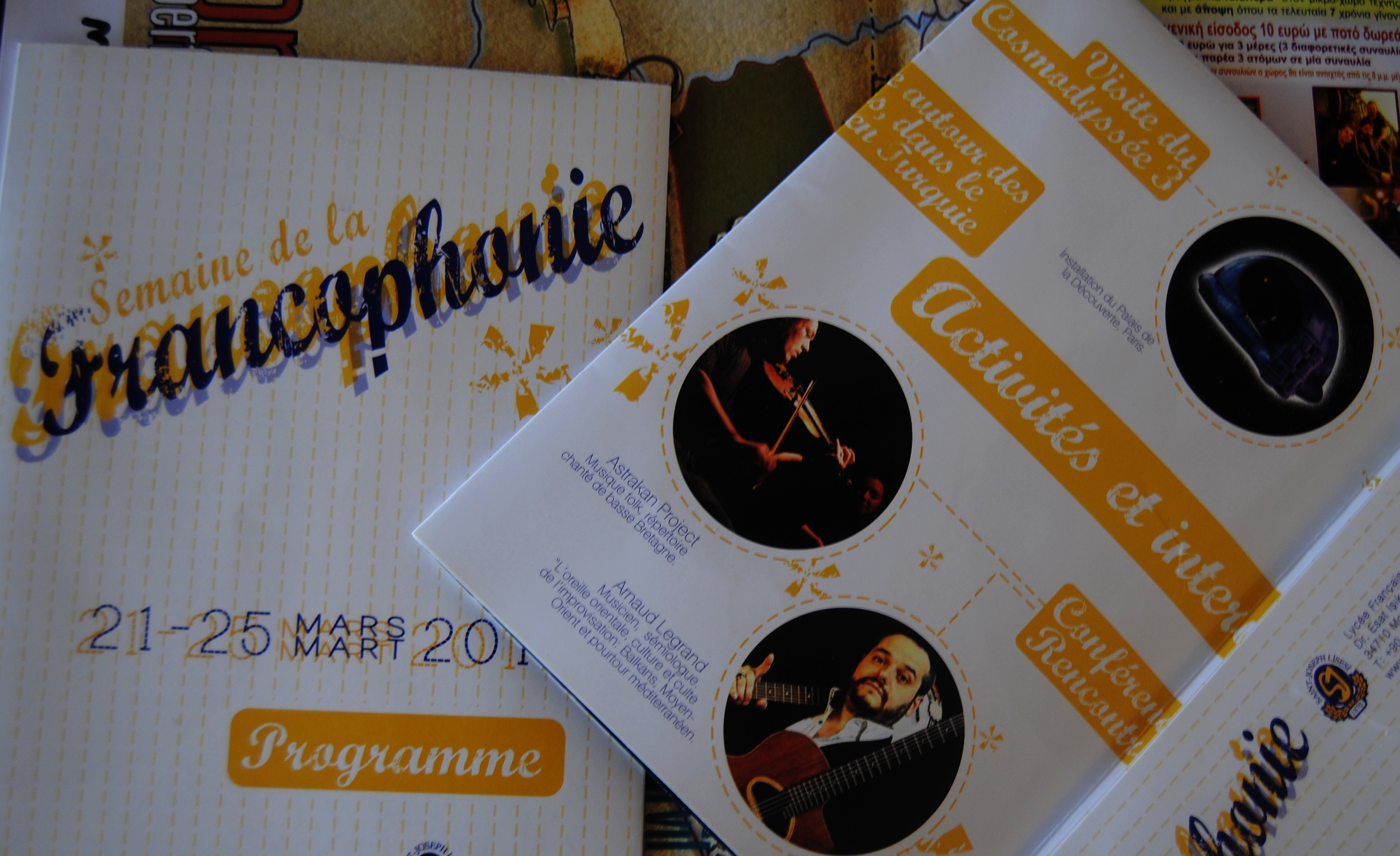
A couple of days ago, I was digging into “old” paper work from the band, and I found this:
.
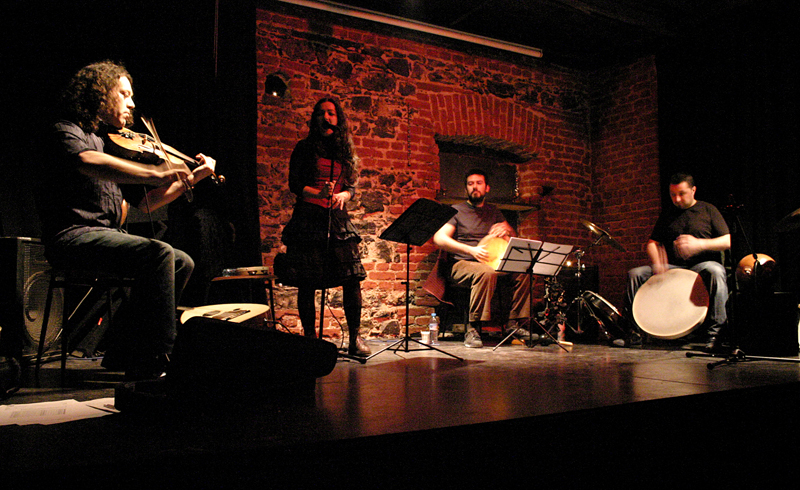
This is the very first program where I and Yann appeared only the 2 of us, and it was in March 2011. When we initiated the project in June 2009 in Istanbul, we recorded a few tunes together, with the purpose of then finding extra musicians to play with in Istanbul. Then from January 2010 on, we started to rehearse and make little shows around Istanbul with one or two percussionists, Ali Dojran (on the right) and Volga Tunca.
.
2011 – Seyr-î Mesel, Beygolu, Istanbul
.
We loved the music we were making together, but none of us being full time musician, which means, all of us having jobs, it was indeed not so easy to organise. We accepted this particular 1st show without knowing none of our percussionists would be available. Then, when we realised it, we really wondered what to do… “how can we play only the two of us? Shall we not cancel?”… but not for too long, we started to practice again the two of us, adapting some songs, making changes so that they’d keep some interest still, working on new ones.
.
.
Our little son was born shortly after, and by the time we started recording, there were two options: either record together at home, either try to record with percussions, which would have meant extra rehearsals, extra-transportation in the city, extra-recording time, all these extras to be translated into time AND money… and we feared that with the limited free time we had it would have taken years. Obviously we chose the first one! But it is rather interesting for us to notice how our music evolved just because we constantly adapted to the conditions we had.
.
.
We still think it could be nice to record a part of our repertoire with loads of different and powerful percussions, it’s a project we still have in mind, but we prefer to wait for the right time and conditions to make it happen.
§ Simone
.
41.00527028.976960
Your friends might thank you for letting them know about our music !
A recurring problem for me in Istanbul is when I need to buy new strings for my folk guitar. In Brittany, most guitar players that play Breton music commonly use hard strings (usually Martin medium) whereas in Istanbul you can almost only find Light strings, despite of the large amount of music shops available. Therefore, I usually have to buy my strings from Brittany or from the web.
Playing hard strings has various consequences :
First of all, such hard strings can make guitar playing be very painful for your fingers.
The guitar itself has to be strong enough to stand resulting strains.
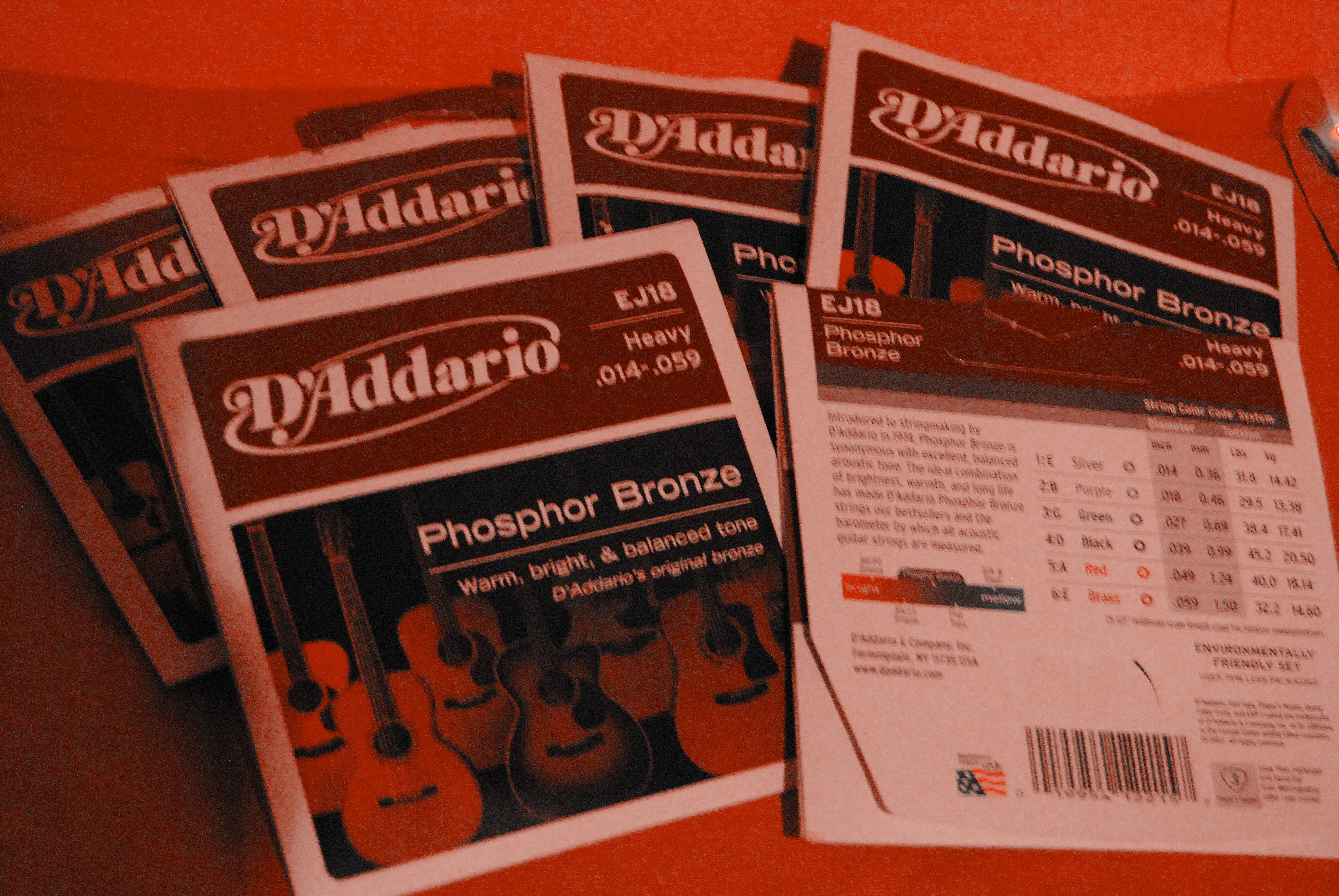
But look, this is what I have found last week in a Breton music shop :
My new guitar strings !
Yes this is even stronger than Medium strings (gauges are between 0.13 and 0.56), these are HEAVY strings, yes (gauges range from 0.14 up to 0.59) !
You may say, “this starts to sound like bass guitar strings !”. Indeed, I used to play with a combination of guitar and bass strings (using a bass string as lowest D, but this is now over !
The blue thing is a piece of pen cap that I cut in order to enable my guitar to stand the bass string that you can see on the picture !
Let’s go and try my new HEAVY strings, my fingers and my guitar have to get used to 🙂 !
§ Yann
41.00527028.976960
Your friends might thank you for letting them know about our music !
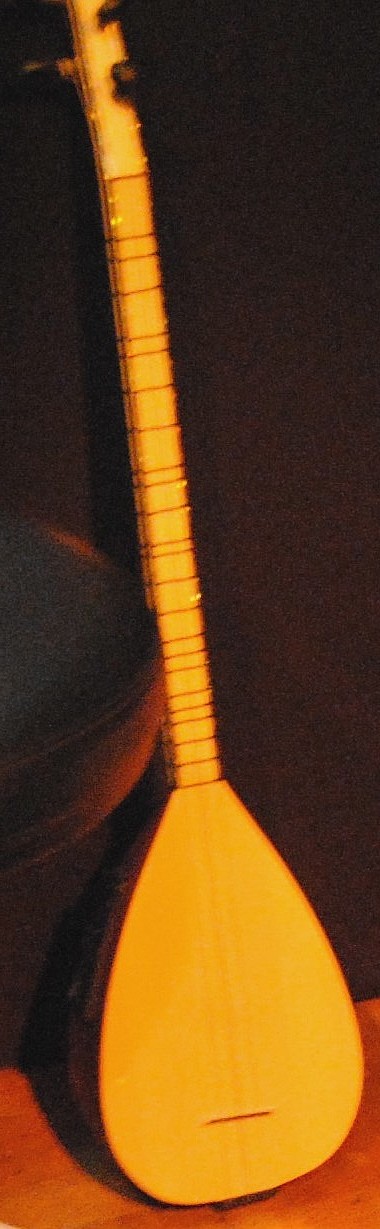
Bağlama, also commonly called “saz” in western Europe has the advantage of having moving frets, which means that fret position can be easily modified until you get the suitable music scale. Moreover, it has extra frets that enables to play notes between the common semitones that you have on a guitar or a piano. Thus, we’re entering the very exciting world of “quarter-tones” and “commas” (you can read this to learn more about this topic).
My bağlama
But those “quarter-tones” can be very different from one culture to another, or even from one performer to another. I always have the feeling that quarter-tones are very (!) high in Turkish music (more technically, I would say they’re about 50-60 cents above the lower degree, a semitone equals say 100 cents) whereas they sound usually lower in Breton music (I would say 30-35 cents. I have made some pitch measurements on Breton singer old recordings, and it tends to agree these values).
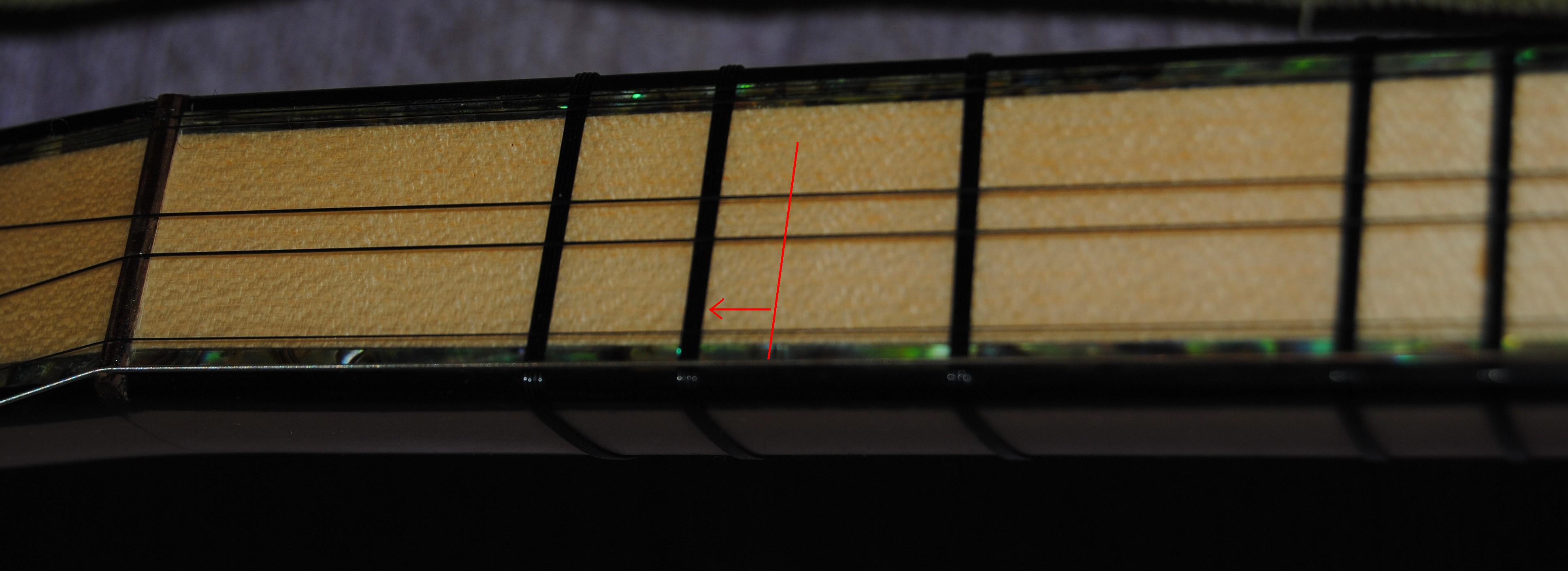
Therefore, moving frets are very convenient for adapting the instrument to the suitable scale, since you can move some of the frets upwards.
Moving the fret to get the suitable scale
I am pretty happy of the result, you can hear it on this live recording we made in Beirut last year : An Daou Gamerad Fidel
§ Yann
41.00527028.976960
Your friends might thank you for letting them know about our music !
Which video you mean ? This one, from our album‘s last song, that we called 7 Hills, based on traditional tune and lyrics, but we changed the original rhythm.
.
.
So how did we do it ? A combination of time + patience + paper + paint + cheap camera + cheap editing software !!!
As usual… any nice & warm comment will be welcome !!!
41.00527028.976960
Your friends might thank you for letting them know about our music !
Music instruments that were (and are still) most commonly used in Breton music were bombard, biniou (breton bagpipe), treujenn gaol, (actually a clarinet), accordion.
Bombard (left) and biniou (right), mostly played together
More recently (i.e. in the 70’s and after World War II), new instruments like guitars, Irish wooden flute, bass, violin, Scottish bagpipes were introduced.
Treujenn Gaol (Breton clarinet)
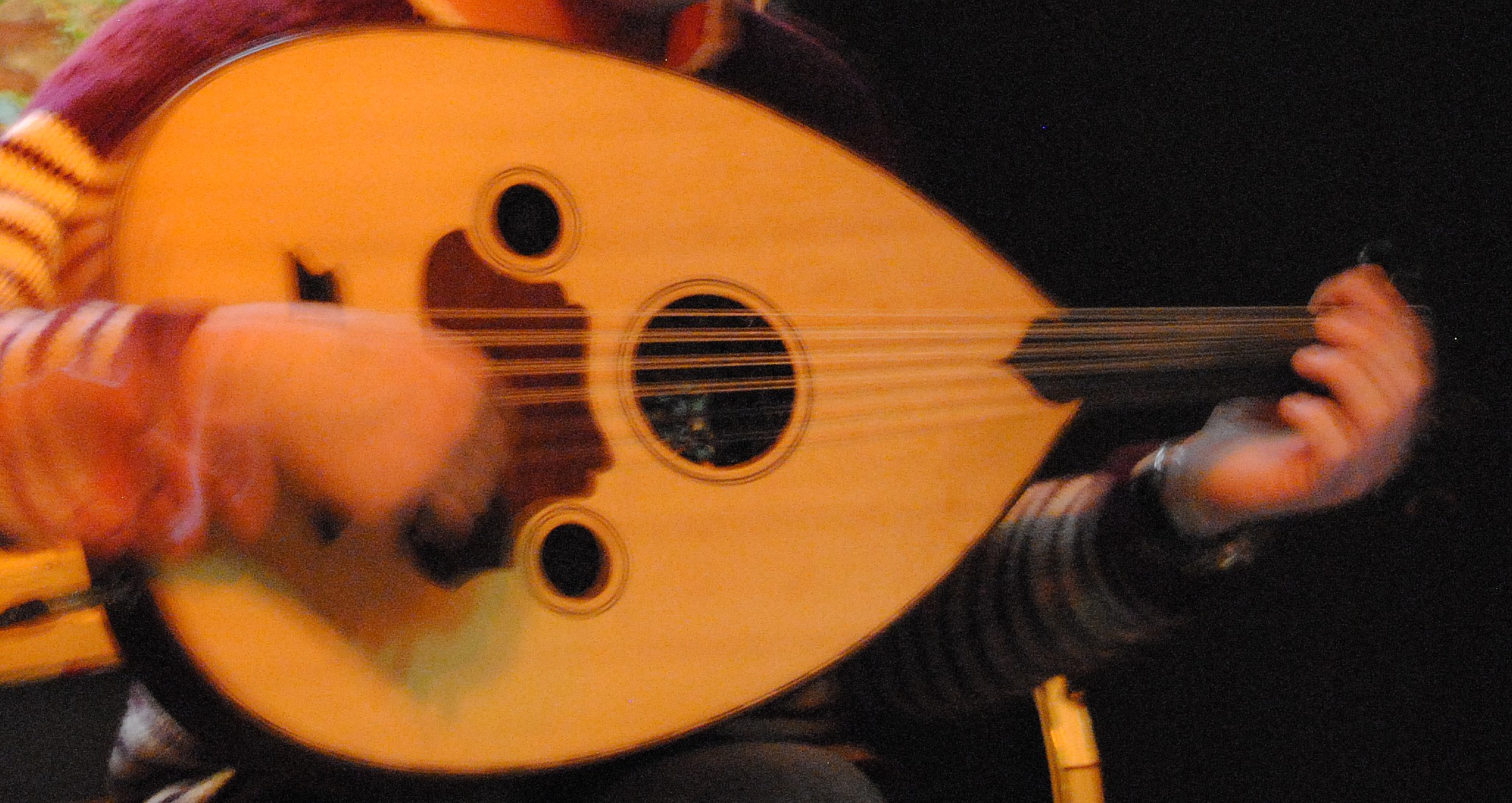
In Astrakan Project, I mostly play stringed instruments. You may have noticed that I use guitar, but also Turkish ‘ud and bağlama (commonly called saz in western Europe). One may think this is to give an oriental flavour to our music. This might be partly true, but I don’t think this is the main reason.
‘ud
One good reason is of course the fact that we currently live in Turkey, where ‘ud and bağlama are commonly used, so why shouldn’t I use them, temptation is so huge ?
But another good reason is that these instruments enables to play “more notes”, including the so called “commas“. In Breton music, we do have “commas” (see here for further explanations, for musicologists only !), yes, but they tend to disappear with the introduction of guitar, accordion and Scottish bagpipes for instance. You can play any note you want on a ‘ud, and almost any on a bağlama (even if there are frets).
Bağlama
When I play a breton tune, I feel closer to the truth (?) when I use the ‘ud than when I use the guitar, I think that’s a good reason for using oriental instruments !
§ Yann
41.00527028.976960
Your friends might thank you for letting them know about our music !
We get asked quite often WHY we chose to sing Breton songs in the Breton language (indeed, some traditional songs from Brittany are also in French).
Actually, we never chose, it just happened that our music’ lyrics are in Breton. Of course, we could explain why we prefer songs in Breton, because of the rhythm of the language, maybe also because of the particular sounds, because of the stories, but explanations came out afterwards.
Don’t give up…
The question should maybe then be “why do you KEEP singing in Breton when such a few amount of people may be able to understand you?”. This issue is for sure a meaningful one for us. None of us was brought up in Breton, in my case, because my family is not from Brittany, in Yann’s case, just like… more than probably 99% of people that are our age. In a survey made in 1997, 0.2% of people aged from 15 till 19 were able to speak Breton (source) . People our age.
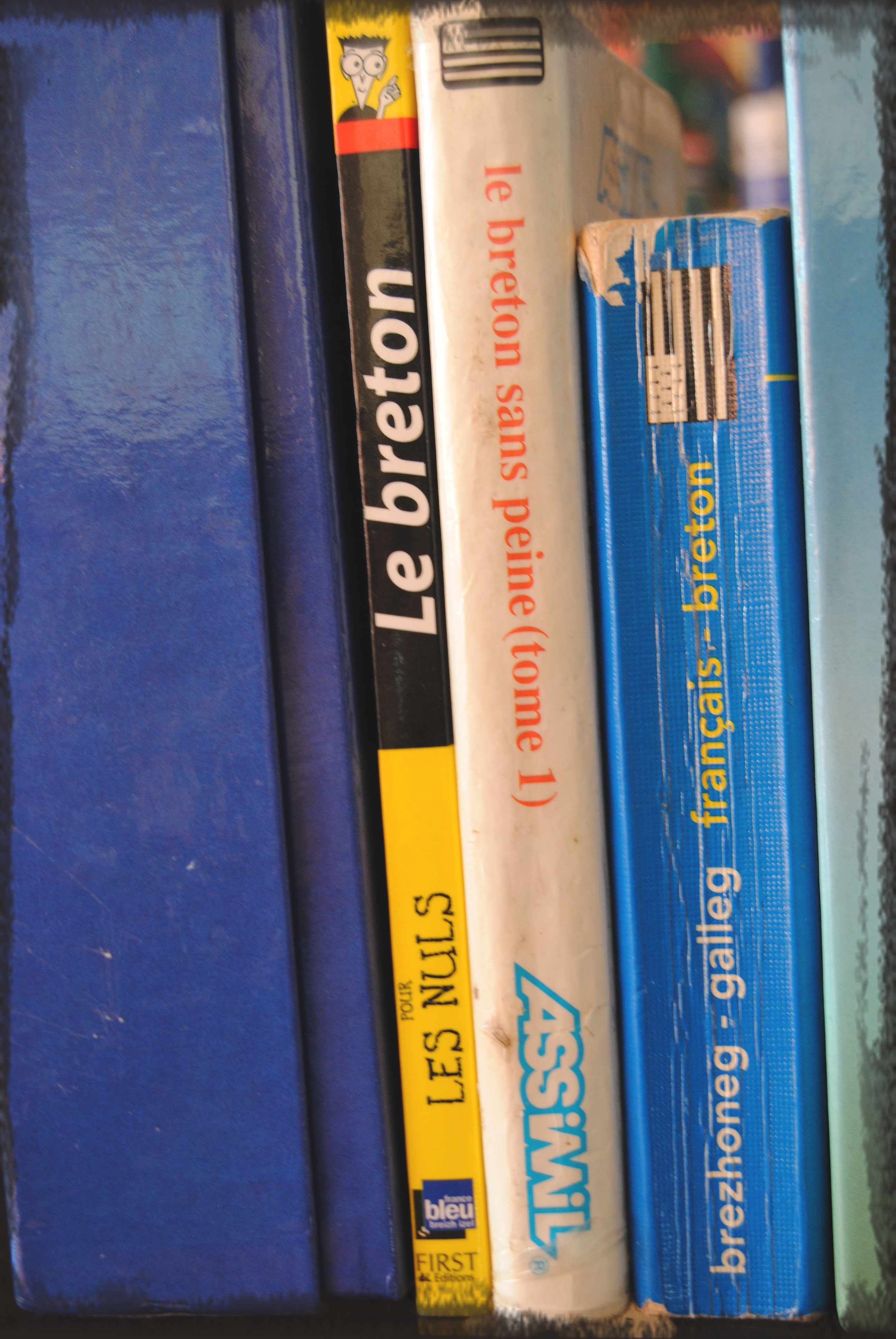
We have both a good knowledge of Breton, from self study, from paying attention to songs, to road signs, from trying to speak to old people, from night classes… But anyone having learned any foreign language for a couple of years knows how hard it is to make it your language. Despite of that, we both strangely relate to that language as being our language. The one we’re emotionally connected with.
We don’t sing in Breton to be understood. Nor to be heroic people trying to save their language. We sing in Breton because it is a part of us. We sing in Breton because it is what we like to do. But when we sing in Breton, deep in our heart, you’ll find sorrow, because we know that not many people will understand all the beauty behind the poetry, we know that no translation or explanation can replace it.
§ Simone
41.00527028.976960
Your friends might thank you for letting them know about our music !
Starting a fresh new year is always the right time to :
start new things, and we’re already working on some new tunes and songs
look back toward what we did in the previous year.
And this how we thought that it was time to do something with some rather good quality recordings we had from our concert in Beirut last spring, so we put them on Bandcamp, and they’re available for download, all together or separately, you can listen to them before, decide to pay something for them or even get them for free, and please : feel free to share them around !
§ Simone
41.00527028.976960
Your friends might thank you for letting them know about our music !
As we use a computer with pre-recorded loops on stage (this post), we realised that we needed (and that we still need !) to find the right balance between those two following extreme situations:
A : The computer only provides very simple loops such as a drone or a basic beat.
B : The computer provides the full set of missing instruments so that we play the songs as they can be heard from the album. B-statement in our minds is this :
I must say that when I had started loop programming, we were first very close to the A-statement. Later on, as I was thinking that my programming skills and experience were increasing, we got very close to the B-statement…
The kind of music we would like to play on stage is somewhere in-between. A-statement may not be sufficient since we are in most cases only two musicians on stage (Voice and stringed instrument, except when we have guests), whereas B gives the feeling that we are not really playing but that the laptop is playing for us. Some would call this “Karaoke” !
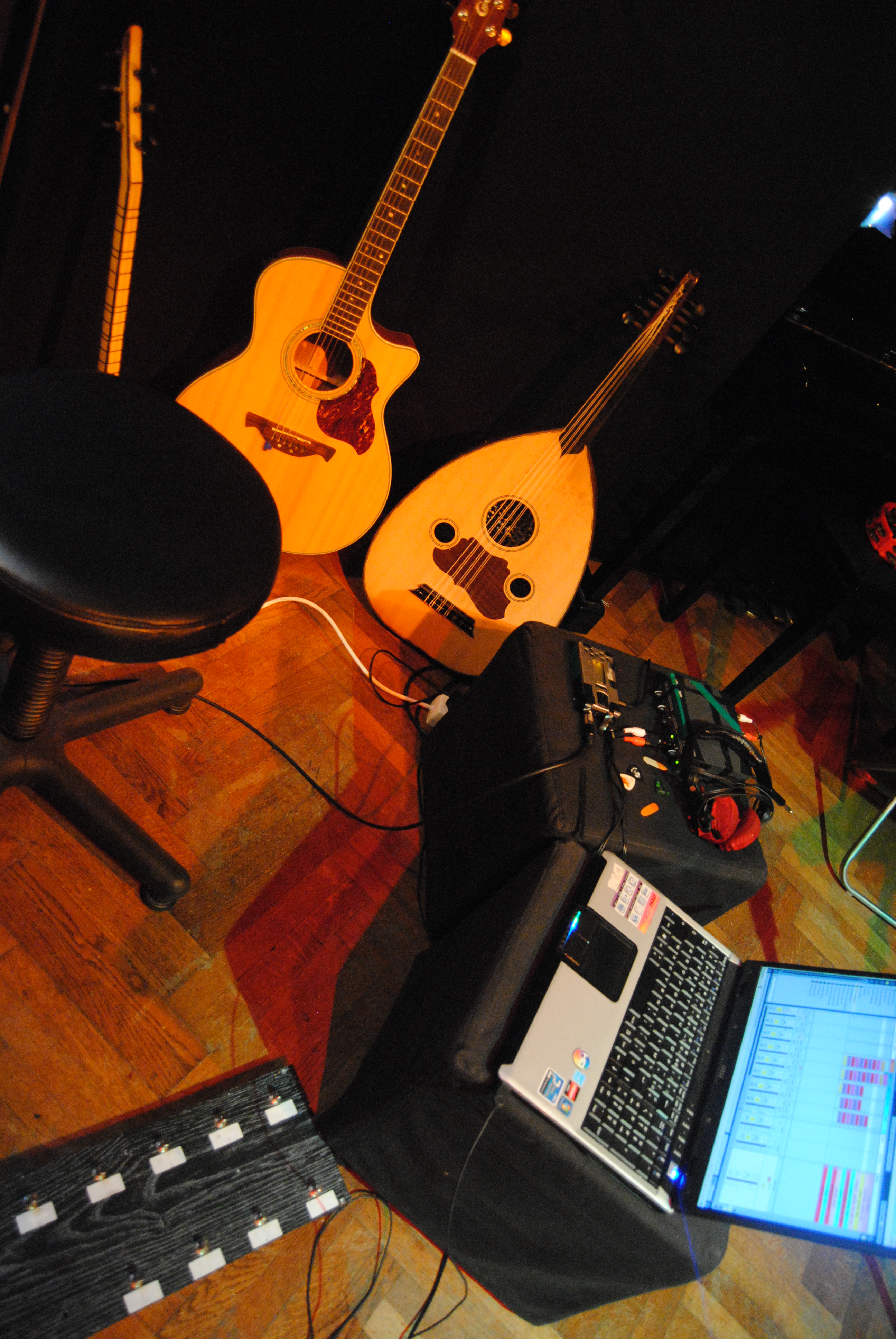
Our laptop, footswitch and instruments
So, we’re going back to A, but not as close as in the beginning, loops mostly consisting in drones and light rhythms. We do hope we’re on the way to find the right balance !
[ yann ]
41.00527028.976960
Your friends might thank you for letting them know about our music !









 . astrakan project .