We have loads of pictures from Portugal, although not as many, since the weather wasn’t as nice as it could be in a usual April month.
Despite of that, it was the most interesting musical trip we’d done in years. Interesting in the sense that not only our concert was great, great because we felt we were fully aligned with the audience, but also because we got many interesting contacts and advices regarding our musical project. Which means there are great chances that we’d go back to Portugal at least one more time this year, maybe twice. We’re working on it right now, but we’ll get back with some up-date very soon. Ib the meantime… we’re really excited about it!
§ Simone
.
41.00527028.976960
Your friends might thank you for letting them know about our music !
Our stay in Portugal is going fine, meaning we got some nice contacts for potential future concerts, so we’re already preparing to come back very soon, but also practising new songs for tomorrow’s concert.
We’ll be recording very soon a version of this song with a guest. But…. it’s a surprise!
§ Simone
41.00527028.976960
Your friends might thank you for letting them know about our music !
How was our last concert in Istanbul? Like many of our concerts in Istanbul… which means: not really busy! I’m not saying that all our concerts in other places are sold out.
Sometimes we know where we failed about advertising and promoting.It happens, and it’s just life.
But in Istanbul, even when you have the feeling people are talking about the up-coming show, even when some say they will show up, even if there’s no football game (it happens… sometimes), even when it’s not raining, even when there isn’t too much traffic, even when there isn’t any other big event around the corner, even when the place is really small… even so, you can never be sure. You can never be sure you’ll have enough people getting in, and by enough, we don’t even talk about money, or ticket sales, nope, we’re just talking about having enough audience so that everyone will feel comfortable in the place.
.
.
The-day-after-the-venue-in-istanbul always leaves a strange taste of un-satisfaction. I keep on asking to venues how we can improve our communication/advertisement/promotion… and they seem to say it is not so bad. And it is never so bad, we always met so interesting and dedicated people. But we feel a huge gap between the time/energy we spend on promoting and the “result” in terms of audience.
And still, we know we did a good concert {did you see the video with Lamia Bedioui?}, at least we’re happy from what we did, we played quite well a couple of new songs, we improved the sound of the loops used on stage, we did some changes in our set-list, indeed, we learned a lot, really a lot from our last performance… and we feel ready for Portugal next week!
§ Simone
41.00527028.976960
Your friends might thank you for letting them know about our music !
Lamia is originally from Tunisia, but she’s living in Greece for about 17 years, and that’s how we met. We were amazed to find so easily some connections between both our cultures, and since we were playing together for the 2nd time, some nice routine is coming up. This is a video from a song of her called “Hey Het”, it’s a traditional song from Lebanon.
41.00527028.976960
Your friends might thank you for letting them know about our music !
[ lyrics, translation & facts for the 7th song from our album >here< ]
We’ve played this song for many years, in fest-noz (breton balrooms). The dance itself is called kas a-barh, and it has origins in the south of Brittany (in the Vannes area). The rhythm is similar to many traditional dances from various places in Europe and in the Balkans.
Traditionally in that area of Brittany, the assembly will repeat the lyrics after the leader while dancing. Our way to add extra voices however is more influenced by the time we recorded it, in Shiroka Laka, a small mountain village from the Bulgarian Rodopi Mountains. During our breaks we used to watch Folk TV. The result then of course doesn’t sound Bulgarian at all, maybe more Albanian?
.
Because of these voices, we named the song “mouezhioù” which means “voices”. Indeed, most of Breton songs, unlike Irish ones, don’t have any official title, we tend to refer to them by the beginning of the first verse, this one being referred to as “pa garche ma mamm”
.
Music & Lyrics: traditional
Instruments : guitar, darbuka
Rythme : kas a-barh dance.
.
Pa garche ma mamm ha ma zad / Ma’m behe bet ur chansig vat
Ma’m behe bet ur chansig vat / Ma’m behe mab un avokat
Ma’m behe mab un avokat / Breman m’eus bet un astralhuiad
Breman m’eus bet un astralhuiad / Na oar na devoam nag arad
Na oar na devoam nag arad / Med konduin e c’har a c’huitellad
Med konduin e c’har a c’huitellad / Monet d’en davarn mintin mat
Ha leun an ti a vugale / Pevar ar bank pemb e gwele
Pevar ar bank pemb e gwele / C’hoaz a vo c’hoaz ma vez danvez
C’hoaz a vo c’hoaz ma vez danvez / Ya ma bez bolontez Doue
Ya ma bez bolontez Doue / Bolontez an dud gwech a vez
.
If my mother and father had wanted to / I would have been more chanceful
I would have been more chanceful / I had married a lawyer
I had married a lawyer / Now I’m with a drunkard
Now I’m with a drunkard / He doesn’t know how to plow a field
He doesn’t know how to plow a field / But he drives his wagon and whistles
But he drives his wagon and whistles / And goes to the pub early in the morning
And the house is full of kids / Four on the bench and five more on the bed
Four on the bench and five more on the bed / And there will be more if there is willingness
And there will be more if there is willingness / Or if it’s God’s will
Or if it’s God’s will / And also people’s will sometimes
.
Notes: As usual, it’s a personal translation, with no attempt to translate the poetic style, it might not be fully accurate, the purpose is more to give an idea about what it is.
41.00527028.976960
Your friends might thank you for letting them know about our music !
[lyrics, translation & facts for the 6th from our album >here<]
Yes, it’s the real title of the song!
Only the last 3 verses (translation bellow) of this very short piece are traditional. They’re not a song as such, they’re extra verses you may add to the end of another song when you’re singing for dancers and you feel that want to carry on a bit more. Simone learned them from her master Erik Marchand.
We like very much the way you can say/write in Breton, “I’ve been to hell” just like a very normal thing, a place where you can go and come back. Nowadays, things have changed of course, but the relation with the “other world” is still very strong, specially among the old generation.
Brittany, Brenilis, entrance to the other world
.
Although it may have a “belly dance” flavour, it’s still a Breton dance! The improvisation singing introduction part is more inspired by Kurdish impro like this one from Aynur Dogan:
.
Music : Yann Gourvil
Instruments : ‘oud, darbuka, violin
Rythme : gavotte danse.
A live version from the same song:
.
E pad an amzer ma yaouankiz, tro ar bed ‘m eus beajet / Istorioù ha kannaouennoù kalz anezho ‘m eus klevet
O nag a breman e deuit din a c’hoan da zisklerian / Da zisklerian istorioù kozh, Dre chañs e veoc’h kontant
Me zo bet barzh an infern e pad mizh gwengolo / O sirañ ar voutou d’an diaoul ha troc’hañ dezhan e varov
Med pa oant erru eno me zo bet soueset, o wellañ an tud jentil peseurt mod e oen lakaet
Net ket ‘vel pe war an douar a barzh o chatoioù,oc’h evañ d’eus a gwinn mat, hag o kontañ marvalhou
When I was young I’ve been travelling around the world / I’ve heard so many stories and songs
And now I’m feeling like telling old stories,If I’m lucky enough, you even might enjoy them
I’ve been to hell last September, polishing the devil’s shoes and pulling his tail
But once I got there I was surprised to see how gentlemen were treated
It was not like when they were on earth living in their castles, drinking nice wine and telling unreal stories
.
Notes: As usual, it’s a personal translation, with no attempt to translate the poetic style, it might not be fully accurate, the purpose is more to give an idea about what it is.
41.00527028.976960
Your friends might thank you for letting them know about our music !
A recurring problem for me in Istanbul is when I need to buy new strings for my folk guitar. In Brittany, most guitar players that play Breton music commonly use hard strings (usually Martin medium) whereas in Istanbul you can almost only find Light strings, despite of the large amount of music shops available. Therefore, I usually have to buy my strings from Brittany or from the web.
Playing hard strings has various consequences :
First of all, such hard strings can make guitar playing be very painful for your fingers.
The guitar itself has to be strong enough to stand resulting strains.
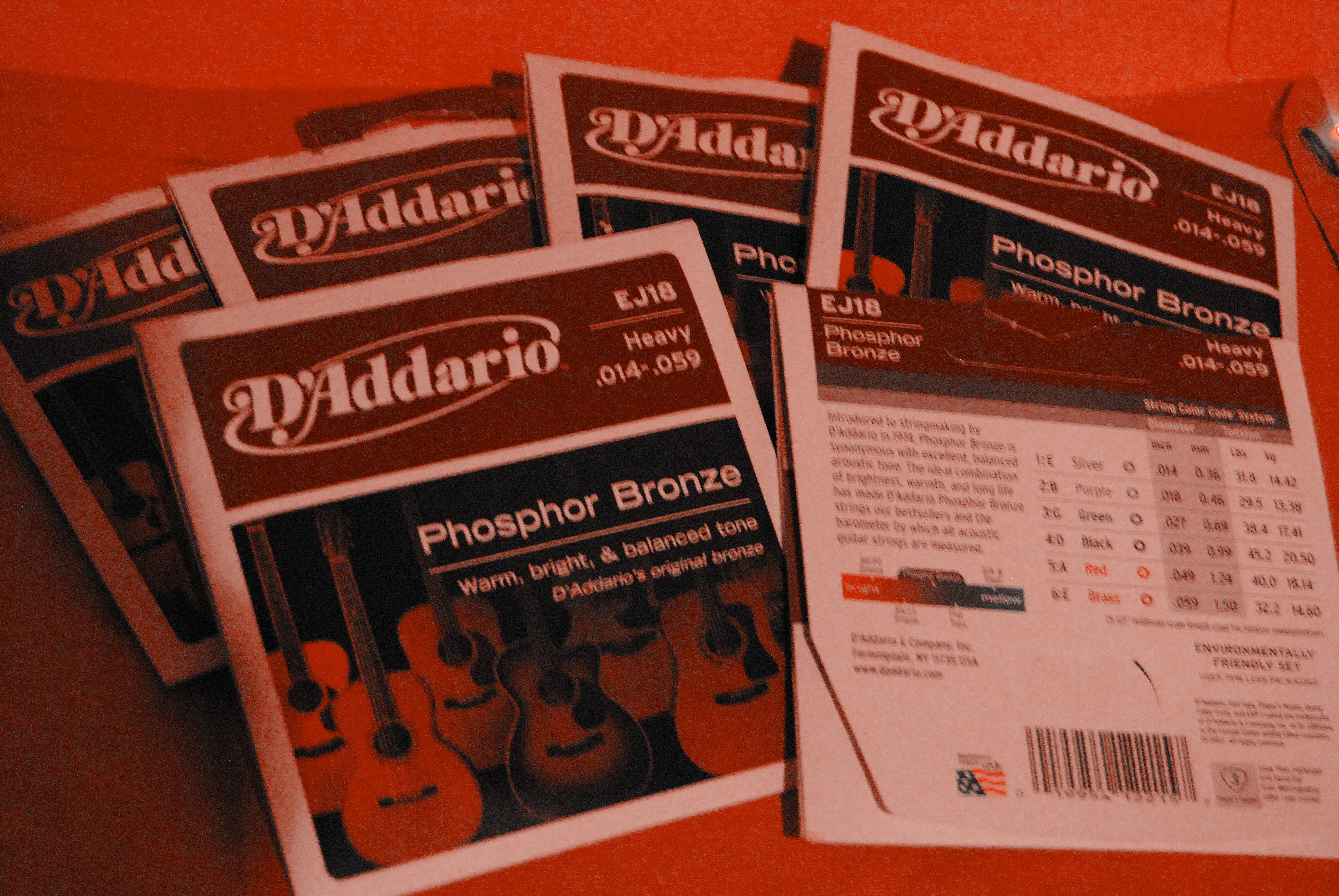
But look, this is what I have found last week in a Breton music shop :
My new guitar strings !
Yes this is even stronger than Medium strings (gauges are between 0.13 and 0.56), these are HEAVY strings, yes (gauges range from 0.14 up to 0.59) !
You may say, “this starts to sound like bass guitar strings !”. Indeed, I used to play with a combination of guitar and bass strings (using a bass string as lowest D, but this is now over !
The blue thing is a piece of pen cap that I cut in order to enable my guitar to stand the bass string that you can see on the picture !
Let’s go and try my new HEAVY strings, my fingers and my guitar have to get used to 🙂 !
§ Yann
41.00527028.976960
Your friends might thank you for letting them know about our music !
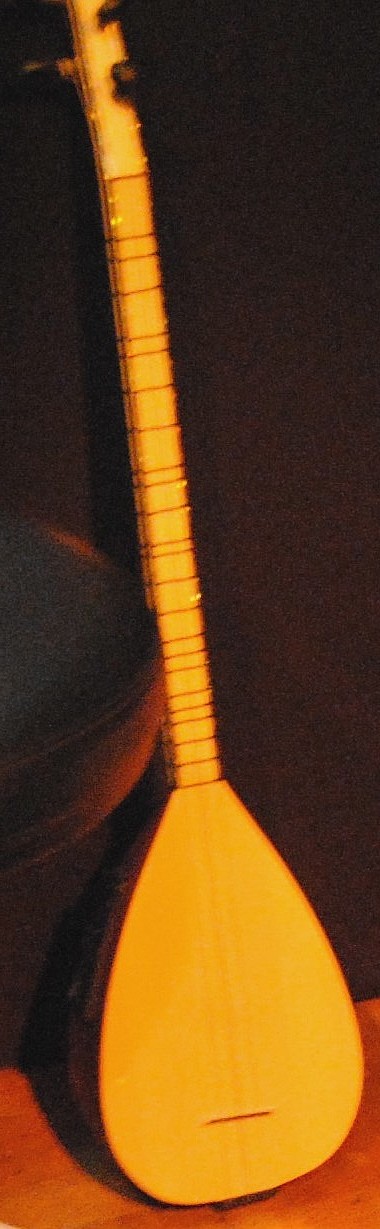
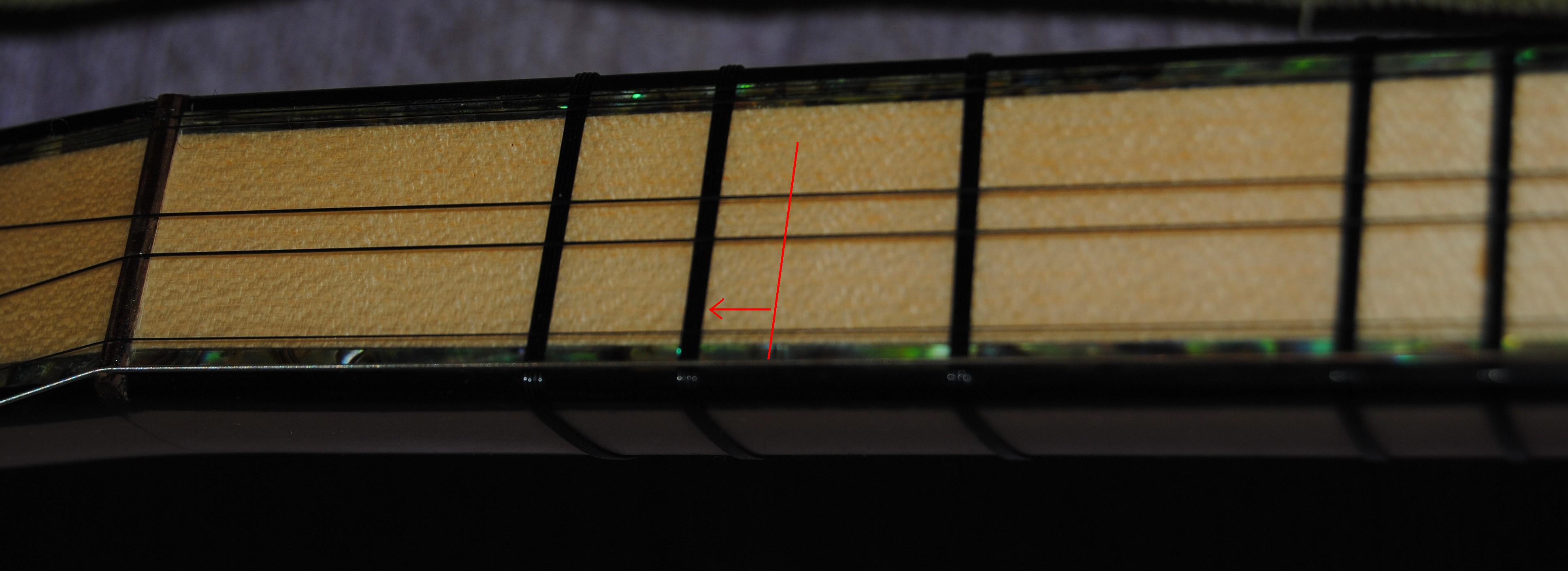
Bağlama, also commonly called “saz” in western Europe has the advantage of having moving frets, which means that fret position can be easily modified until you get the suitable music scale. Moreover, it has extra frets that enables to play notes between the common semitones that you have on a guitar or a piano. Thus, we’re entering the very exciting world of “quarter-tones” and “commas” (you can read this to learn more about this topic).
My bağlama
But those “quarter-tones” can be very different from one culture to another, or even from one performer to another. I always have the feeling that quarter-tones are very (!) high in Turkish music (more technically, I would say they’re about 50-60 cents above the lower degree, a semitone equals say 100 cents) whereas they sound usually lower in Breton music (I would say 30-35 cents. I have made some pitch measurements on Breton singer old recordings, and it tends to agree these values).
Therefore, moving frets are very convenient for adapting the instrument to the suitable scale, since you can move some of the frets upwards.
Moving the fret to get the suitable scale
I am pretty happy of the result, you can hear it on this live recording we made in Beirut last year : An Daou Gamerad Fidel
§ Yann
41.00527028.976960
Your friends might thank you for letting them know about our music !
Which video you mean ? This one, from our album‘s last song, that we called 7 Hills, based on traditional tune and lyrics, but we changed the original rhythm.
.
.
So how did we do it ? A combination of time + patience + paper + paint + cheap camera + cheap editing software !!!
As usual… any nice & warm comment will be welcome !!!
41.00527028.976960
Your friends might thank you for letting them know about our music !











 . astrakan project .